Thursday, June 02, 2005

Beef Asado Roll (Baked Siopao)


UPDATE as of 3-6-2010:


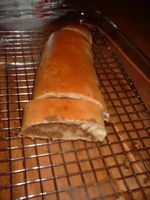
This beef asado roll is actually a baked version of my ( steamed) beef asado siopao. Instead of making individual buns, I made a long log.

tin ni Roland,

Pasensya na sa tagal nitong post...

Eleanor, sana maihabol ko ito sa beef pares mo. How did it turn out?

To all who gave tips (anonymous) and recipe (Santos) on the previous post, thanks a lot!

My apologies for not being able to answer in a timely manner some of your comments/emails. Subsob lang sa trabaho.

wire whisk, I was able to get rice ( a sackful of 25 lbs was $13) at a Filipno store 1-1/2 hrs away from me. There is another Asian store 2 hrs away. For some spices, there is a Spice of Life Store near me.

Inna and anonymous, welcome to my blog. Pasensya na if I don't have the time to tinker much with my template anymore like linking. Busy lang kumayod.

Tina, I'm glad your hubby liked the beef pares.

Okay, let's get to the topic:

What you need for this is a recipe for sweet bread. I recommend the bread machine recipe of Basic Egg Bread from Fleischmann.

Grind your leftover beef pares (you may add chopped raisins, or for variation, substitute any meaty dish like chicken strips with pimiento, or ham with cheese, coarsely fine enough to be rolled into bread, or you may use cooked monggo).

Prepare dough under dough setting (not bread setting).

When done, place the punched-out dough on the table sprinkled with flour.

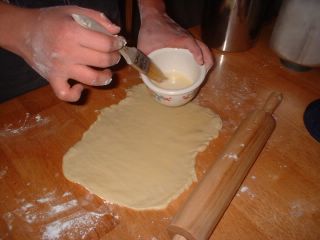
Flatten it to a rectangle shape almost as long as the rolling pin. Brush with melted butter (melt 2 tbsp).

Place the filling on top

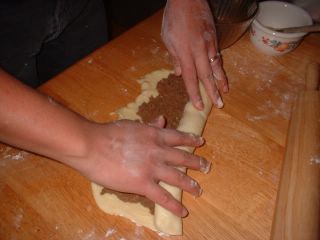
Starting from the long end, roll tightly.

Seal the ends and place the log on a greased baking pan with the seam under.

Place on a greased baking dish with the seams under. Prick on top with fork for vents so steam from filling can escape while baking. Let rest for 30 minutes in warm, moist and draft-free environment (best place is inside the warm oven; remove when ready to heat up the oven). Place wire rack at the middle.  Bake at 400 deg F for 15 to 20 minutes or until golden brown.

Slice with a sharp bread knife. For variation, cut the dough into pingpong ball-sizes, place a tbsp of filling at the center, pinch the edges together to seal, place on the baking sheet with the seam end under and bake for 12-15 minutes. It's like pocket lunch, pretty much like the things I used to buy in Goldilocks for baon, because it is so convenient to have such instead of a packed lunch.

Posted by HelloIf you are going to use monggo, you can cut the dough right after rolling tight into several pieces and put them side by side in a loaf pan with the sliced edges on top-bottom orientation.

Sunday, April 10, 2005

Beef Pares

This is a re-posting of beef pares from my old kusina, edited with some new ingredients as per comments given that time, and a new method.

This dish is something I created in my effort to copy a favorite (and famous) item in some side-street restaurants in the Philippines. Beef Pares, a Chinese influence to Filipino cuisine, I believe, is juicy tender stewed beef in sweet brown sauce. By experimentation, I was quite successful in re-creating the dish in my now American kitchen. While the sauce is served thin in the Philippines, I have tweaked it to come up with a thick sauce, which has more appeal to the Western tongue of my in-laws and husband (who is quite picky when it comes to food). They (and I) love this dish. During a town hall meeting, my father-in-law was chatting with a friend, and he introduced me, with the phrase, “Linda [my mother-in-law] is already a good cook, but she [pointing to me] is even better!” While I felt flattered with the remark, I was embarrassed because my mother-in-law was also with us! It must be quite insulting to her to hear that, but then we have a very good relationship anyway, and even she tells me I am a good cook. I usually serve this dish during my birthday celebration, although at times I prepare it only for my family over the weekend, and I end up with some leftover. With this leftover, I can make another Chinese-influenced Filipino favorite merienda (snack) – the beef asado siopao, which are steamed buns with beef filling, also loved by my in-laws. Or make it into a heavy snack – beef asado roll, which is a baked bread with beef filling (my very own idea). I am very proud to be sharing this recipe not only with other Filipina immigrants but also with Americans as well.

INGREDIENTS:

3 lb boneless beef chuck roast
1 tbsp oil for browning
2 dried bay leaves (laurel)
2 star anise
2 cinnamon sticks
some dried orange peel (optional)

1/4 cup of red wine vinegar
1/4 cup soy sauce
1 tbsp Chinese rice wine
3 cloves of garlic, crushed then minced
5-10 peppercorns, crushed or freshly milled
1/2 cup of frozen beef broth (I have several in my freezer)

Additional ingredients for the sauce:
3 tbsp light brown sugar (or according to taste)
2-3 drops soy sauce to darken the sauce some more, if desired
salt and pepper to taste
2-3 drops of Worcestershire sauce
1 tbsp cornstarch dissolved in 1/2 cup cold water
1 tsp sesame oil


METHOD:

Brown the chuck roast on all sides using a heavy iron pan on high heat. Place the bay leaves, star anise, cinnamon sticks and orange peel in the slow cooker and then the roast on top of these.
Mix together all the other ingredients and pour onto the roast. Place the frozen beef broth on top of the roast to baste it while cooking. Cover and slow cook for 8 hours.
After 8 hours, scoop out the sauce and let pass through a strainer to remove the spices. Keep the roast in the slow cooker under warm setting. Transfer the sauce into a fat separator then pour out the sauce minus the fat into a small saucepan. Boil. Adjust the taste with the additional ingredients for the sauce. Thicken to desired consistency by adding the cornstarch-water mixture in a slow stream while stirring. Turn off the heat and stir in the sesame oil.
Transfer the roast to a serving platter and pour the sauce over. This can be topped with snips of chives for a more appetizing look. Serve with mashed potatoes or plain rice, plus steamed vegetables.

Uses for the leftover, if any:

I roughly chop the meat, then reheat it on low with the sauce, constantly stirring to avoid scorching. For every cup of chopped meat, there must be about 1/2 cup of sauce. If the sauce is too much, I just let it evaporate as I reheat. If it is not enough, I add some more water in increments of 1/8 cup plus some soy sauce, sugar, salt and pepper to taste. The mixture must not be runny and must hold together when cooled.

I use this as filling either for beef asado roll (baked version) or beef asado siopao (steamed version).

Thursday, March 24, 2005

TOGE (Mung Bean Sprouts)

Para ke Loree H. Love you!

I had plenty of mung beans; thanks to my online friends who sent me several packages. Because of this abundance, I once again had that tendency to experiment with them. I thought I'd make my own sprouts.


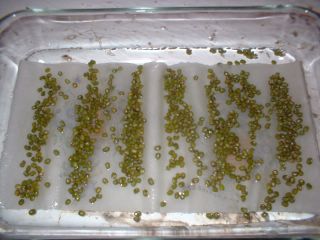
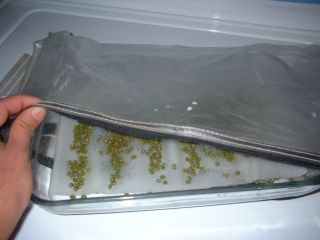
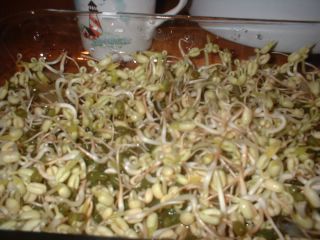
Prepare the baking dish by putting 2-3 layers of paper towel submerged in tepid water that is 1 inch high. Sprinkle 1/4 cup of mung beans to distribute as evenly as you can. Cover loosely with plastic (I use the plastic pouch that came with the traveling bags.) then place on a warm floor (if you don't have a warm floor, use heating pad. Heating pads are used by gardeners when they are starting their seedlings indoors in preparation for spring/summer planting to maximize the warm weather.)

Everyday add 1 cup of water by pouring slowly and carefully as to not displace the sprouts from where they have established their roots in the paper towel (which serves as a substrate much like the soil. Without paper towel, and without anything for the roots to hold on to, the seeds just drown in the water and rot. I know because I tried to eliminate this factor after successful sprouting on the third try, and so failed without it.)


With my experimentations, I came to the conclusion on what were obvious needed factors when sprouting:

1. Paper towel serves as a growing medium like soil.

2. Water to germinate the seeds and feed the seedlings.

3. Plastic to keep the moisture in and the cold air out, not to keep the dust off. (Remember, this is not the Philippines. My area is cold and the air is so dry that humidity levels drop down to 30% in winter time. Without the plastic, the radicle that started to grow after one day just stopped growing. I realized it was because the cold and dry air tended to cool the water enough to inhibit germination and also would dry up the area surrounding the sprouts, making them brown.)

4. Warm floor or heating pad (the optimal temperature would be around 70-80 deg F, which would sound ridiculous for someone living in the PI, where temperature changes are not noted so much because they are pretty much stable, so in PI, one can place this anywhere in the house).

See...I am really learning about gardening.

Harvest these sprouts on the third day. Rinse well and refrigerate. Consume on the same day of harvesting. I am guessing that light promotes greening of these sprouts and formation of leaves, but I am not sure. I have done these at least 5 times successfully, and ate these. They tasted good and not at all bitter. I even tried to taste the raw brownish root tips, and they had the pleasant taste of raw greens.

What to do with toge?

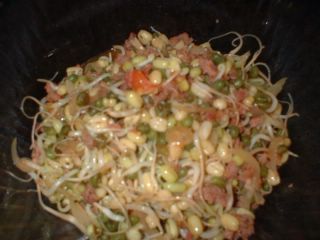
Sauteed with ground beef (you may add julienned carrots and 1/2 cup of beef broth), you may eat this with plain rice, or make spring rolls out of them (adding strips of sweet potatoes is also desirable for me)...


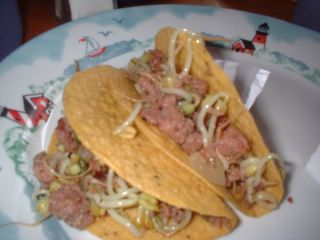
I even used it in leftover tortilla from a taco kit dinner...

I also add it to shredded leftover beef pares.(I reheat the leftover, then sprinkle the sprouts and just get them to the point of blanching.)


So for those of you who like bean sprouts, just give it three days. As long as you store mung beans, you will not have to go to the grocery store to buy mung bean sprouts.

Nutritional value of mung bean sprouts, taken from nutritiondata.com:

The Good
This food is low in Saturated Fat and Sodium, and very low in Cholesterol. It is also a good source of Protein, Thiamin, Niacin, Vitamin B6, Pantothenic Acid, Iron, Magnesium, Phosphorus and Potassium, and a very good source of Dietary Fiber, Vitamin C, Vitamin K, Riboflavin, Folate, Copper and Manganese.

The Bad
A large portion of the calories in this food come from sugars.

Detailed nutritional information can be seen here.

Posted by Hello

Thursday, March 17, 2005

I Found 3 Sites Useful to the Wise Consumers

Ang mga Pinay, parang si Lumen -- wais!

Have you always wondered how you can make your own mixes for Sloppy Joe, tacos, white sauces, biscuits, banana bread, and the likes? Not only is it more economical if you can prepare them yourself, you also have a peace of mind knowing what exact ingredients you put into them, right? If you think the same way I do, then you might be interested to see Saving Money With Homemade Convenience Mixes. A printable PDF version is also available.

If you want to extend your economical ways of preparing food, you might find Recipe Ideas for Thrifty Families useful (I do find it extremely interesting!), also with available PDF version. It contains such recipes as Mac&Cheese, Salad Dressings, more sauces, guidelines for cooking vegetables in the microwave.

If you are a vegetarian or with teen-aged children who want to be/remain vegetarian, you might want to see Teen Vegetarian Recipes, also with PDF printable version.

All of these were prepared by Nutrition Specialists. More information centered on family life here in Maine can be found here. Click on any of those topics of interest. I got the above links through the topic Food Safety then Food Safety FAct Sheet Online.

Deviled Eggs

Pasensya na sa tagal ng post ko. Excited pa ako sa trabaho eh.

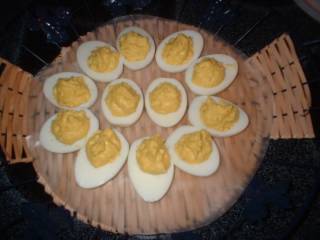
Deviled eggs are a common item in wedding receptions, and basically any gathering here. I liked it, so I researched for the recipe. It was not hard to find it. Just type "deviled eggs" into the Google search engine, click on the first link in the list, and you will get the recipe below (which I am posting here for your convenience; other tips on eggs can be found in that site). My kids loved them, though I discovered that my husband did not really care for boiled eggs (Malay ko ba! Eh di nag-hotdog sandwich sya!) My boys and I ate them with rolls. It is almost like our Egg Sandwich, only richer with eggs.

Classic Deviled Eggs

Serve for any occasion, whether it be a wedding feast, a picnic in the park, or for lunch or dinner!

Items Needed: (for 12 Deviled Eggs)


  • 6 hard boiled Eggs (large)
  • 3 tablespoons mayonnaise or salad dressing
  • 1 tablespoon sugar
  • 1 teaspoon mustard (honey mustard is great!)
  • 1 teaspoon vinegar
  • salt & pepper to taste
  • paprika (optional)

    To boil eggs, place eggs in enough cold water to cover completely, bring to a rolling boil over high heat.

    Reduce heat to a lower MEDIUM BOIL and cook an additional 12 minutes.

    Promptly chill eggs so yolks stay bright yellow.

    Remove shells from eggs, and halve lengthwise with a knife.

    Carefully remove the yolks, and place in a medium bowl.

    Mash yolks with a fork, and add remaining ingredients.

    Very carefully spoon mixture back into the egg white halves. Garnish with a light sprinkling of paprika (optional).

  • Posted by Hello

    Thursday, February 24, 2005

    Braised Tip Steak with Capers


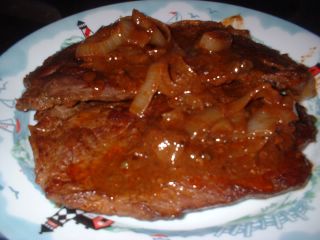
    This is tip steak. It is not so tender and not so lean, so I cook it usually by braising. Tap it with paper towel first to remove excess water before browning.


    After browning tip steaks, remove and set aside. Heat 1 tbsp of oil on med-high. Sautee 1 medium sliced onion and 1 tbsp capers. This is a jar of capers. I just saw a recipe in one magazine using this. I had no idea before what it was. Luckily, my husband, who did not know about it either, found it. It has a different spicy, not hot, taste.


    Add 1/4 cup A-1 Regular steak Sauce mixed with 1/4 cup beef broth or water. Lower the heat (about 3), cover and simmer for 20 minutes or so until tender, checking from time to time and adding 1/8 cup water as necessary to avoid scorching.


    When tender (test with fork), see that there is enough sauce left to pour over the steaks. Season with salt and pepper as necessary.

    Hubby liked it, so now it is among my list of recipes. Posted by Hello

    Saturday, February 19, 2005

    Bulalo

    Slow-cooked bulalo is a classic among many families.Sassy talked about Bulalo and has a recipe for it and a deviation from the traditional way of cooking it. Ting-aling also has a post here. With all that I don't need to post a recipe at all. Just wanted to share some tips.

    Bulalo is called Pot-au-Feau by the French, and this is not at all exclusive to the two nationalities. Hence we cannot call this a truly Pinoy dish, but one which is loved by Pinoys. However, while other terms are used to denote the same method of cooking beef, when we say "bulalo," it refers to the bony parts (usually the shank, be it of beef or pork). It produces stock that is tasty and satisfying indeed.

    My preferred ingredients and method:

    Beef shank (I have frozen cuts labeled "bone soup") - thawed in the fridge for a whole day or overnight, boiled in a saucepan for 15 minutes, drained, and placed in 10-qt slow cooker with as much water as it can accomodate, cooked on high for a minimum of 6 hrs

    spices - 3 pierced cloves of garlic, 1 whole peeled onion,, 10 peppercorns, 1 bay leaf, slices of celery (added at the start of slowcooking)

    vegetables - chunks of potatoes and carrots added 1-2 hrs before serving, then snap beans or pechay or cabbage added 30 minutes (or less if you want it crisper) before serving

    Salt or patis to taste

    I observed that my in-laws also use the same method of cooking corned beef or ham (as cured by the butcher), hence this dish is welcomed by them as well. However, they serve the meat, potatoes and other veggies separately and without the stock, while we Filipinos love to have them all swimming on our plate full of rice, with the soup stock served in small bowls/cups, on which I also love adding snips of spring onion and a dash of ground white pepper.

    If I plan to store some of the stock, I get about 4-6 cups from the stock into a big saucepan to cook the vegetables before serving Bulalo. Then I strain (or I let them stand for a while in wide-mouthed bottles so sediments will settle, refrigerate to harden the oil and remove it first) and freeze the leftover stock in muffin pans (the 6-cup trays I used in my leche flan) for 30 minutes empty containers of cottage cheese/sour cream for at least overnight then transfer them into labeled freezer bags. Great for cooking other beef dishes or as soup base for ramen.

    Tuesday, February 08, 2005

    Beef Tenderloin Steaks

    I remember the time when I had a conversation with my mother-in-law. My hubby had told her on another occasion that I was a good cook, "but I miss the simple steak/boiled potatoes/boiled veggies." That conversation made me realize that indeed, what I have been trying to do with the meals I serve were too complicated (sauteeing, adding sauce). I likened that food preference to what we Filipinos would consider an everyday simple meal: pritong isda (fried fish), Kamatis (raw tomatoes) with patis or patis-mansi (patis combined with calamansi juice) with blanched kamote (sweet potato) tops (the young leaves with the tender stems), and plain rice. So whenever I feel too lazy to cook, I cook steaks. Or when I crave for something Pinoy like pancit or munggo guisado, I cook steaks only for my husband. And beef tenderloin steaks are the best cuts.


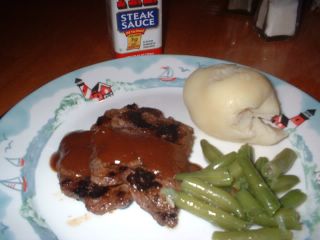
    cooking tenderloins on a heavy cast-iron skilletUsing cast-iron skillet heated on high with 1 tbsp of oil, beef tenderloin takes only about 5 minutes per side to cook for well-done steaks. That's how my hubby likes it. For some who like it medium-rare it may take as short as 2 minutes.


    Served while hot and juicy (overcooking will dry it up) with A-1 regular steak sauce, boiled veggies and boiled potatoes is how my husband prefers it. I can serve this to him anytime and expect a heartfelt thank-you kiss after the meal. This to him is the typical good American meal, which to most Filipinos would be considered good beef tenderloin steaks with boiled veggies and boiled potatoesbut expensive (beef is very expensive in the Philippines) and usually only available in high-class restaurants or hotels, not in wet markets where most Pinoys get their supplies of fresh meat.


    Since my in-laws raise the cattle for our own yearly supply of beef, it is indeed the cheapest (and best considering that it is grass-fed and we know exactly how it was raised. This type of beef can command a high price if sold, and a lot of consumers concerned about the food they eat would grab at the opportunity to get a hold of this grass-fed cow even at a high price). We pay only $1 per pound to the butcher, no matter what cut (good steaks in the grocery stores can range from $4 to $8 per pound). The rest of the "cost" is into the labor we/my in-laws put into raising the cattle. Since we divide a whole cow into 1/4 (four families), we get to shell out only $250 per year for butchering. Not bad eh? However, for the whole year, from our share of the cow, we only get around 4 lbs of tenderloin steaks. So when we run out of tenderloins, I cook other steak cuts like porterhouse, t-bone, rib-eye, etc. I will post on how I prefer to cook these other cuts in the future. A related post about beef is found here. To know more about beef cuts, click here. (I noticed that I have rarely posted about these meals that are common in my kitchen now that I am where I am.)Posted by Hello


    I mentioned to my Filipino dr-friends here about our grass-fed cows and the benefits of eating grazing animals, as compared to grain-fed. They were very interested in buying if my in-laws would sell the beef. I talked recently with my in-laws. My brother-IL is taking over the herd, and they plan to sell, but the selling is by the half: 1/2 or 2 halves or 3 halves of the cow. Not 1/4 , not 20 pounds, etc. The cost would be, regardless of the cut, $1.75 per pound to my in-laws, $0.50/lb to the butcher (I think they might have had an arrangement with the butcher that by bringing him more butchering jobs, he lowered his labor costs), which will come to around $500 per half of the cow. Not bad, considering the quality of the meat and the price that is very competetive against those available in the grocery stores. But my brother-IL would be selling only 1 cow this year's fall (yes, there is that timing. Not this winter, spring nor summer.) . I hope more local farmers would go into that. Not only would it bring income to the local farmers and to the local community, it would also benefit the community in the fight against obesity and its complications (which we can now see as having its roots from the processed and refined foods that are so ubiquitous).


    If you are also worried about the beef you buy from the grocery store, consider looking for a local farmer in your area who is also into the same kind of business. Not only are you using your money wisely, you are also doing your body a favor by giving it real good food. If you have no choice but to buy from the grocery stores, here's a good resource for guidelines.

    Thursday, February 03, 2005

    Gallstones, Kidney stones and Hyperuricemia

    I was operated before for my gallbladder stone (GB removed), and a consequent finding of my abdominal ultrasound then was the presence of a kidney stone about 1 cm in diameter. I had no histopath of the stone that was removed; we left the kidney stone alone. (My uncle-surgeon operated on me for free). I was thinking that the two stones might be related.


    In formation of GB stones, there is the 4Fs mnemonic that I recall from Med school These enumerate the four F risk Factors that the patient might have to develop gallstones: Female, Fertile, Forty's and Fat. I was then 30 y.o. and certainly slim. So my RF were only that I was a female and at my reproductive age (not Fat, not Forty). I sought for other explanations, and I tried to link the two stones. I recalled that around 6 months prior to the diagnosis of my gallstone, I suffered from low-back pain that was not traceable to UTI nor lumbar problems, but which I could surmise to be secondary to my very very high levels of uric acid in my blood (hyperuricemia). Nirarayuma na ata ako...


    I could also blame my infrequent sips of water...During those days when I often forgot about my thirst, thinking, "I'll attend to the next patient first then I'll drink," plus the lack of potable water save from bottled ones that I had to buy from the store across the street (nakakadyahe magpabili sa maintenance), I probably only was (unintentionally) able to drink about 6 cups of liquid (water, coke, coffee) per day or less...not much for a hot place on earth!


    So along those lines (hyperuricemia and very little water intake, the latter contributing to concentration of urine formed, aggravated by procrastinating the bladder emptying) I deduced, without further laboratory tests, that my two stones could have resulted to the precipitation (due to low water level) of the uric acid crystals in my serum.


    Of course I kept in my mind the guidelines for low-purine diet to lower my uric acid levels, but then, I recalled having read that most of the uric acid we have in our body came from our own production, and only minimally from dietary sources (I am telling you, if you are one hypertensive hyperuremic diabetic patient, you might die of starvation if you try to stick to the dietary guidelines!)


    I believe that my usual food intake does not cause the alarming levels of my uric acid. Especially that my sister and an aunt also had gallstones and had their GBs removed.


    After having visited Fanatic's blog on caffeine, uric acid and gout, I sighed a relief upon her re-affirmation of my belief that the dietary intake of purines account less significantly than my own body's production. And what is more comforting is the reassurance that I can continue to enjoy my coffee and may even increase its intake without subjecting myself to the "dangers" of forming uric acid crystals; on the other hand, it promotes excretion . Still, I have to develop the habit of drinking more water (at least 2 gallons a day!) for this purpose.


    I remember after my operation while I was on duty, I was with a nurse who also had a prior Cholecystectomy (his was more complicated and he had multiple stones), and he told me that, "Pano yan, doktora, eh di tataba ka na rin? Di ba pati ate mo ganyan din. Tamo ang taba nya ngayon...tapos ako rin, tumaba."


    Haha...I questioned his line of reasoning for that. To me, my lack of GB would mean that my bile (which helps in the digestion of fatty foods by emulsifying them so that digestive enzymes could find more surfaces to act upon) would come in steady stream to my small intestine, in contrast to the more controlled release by the gallbladder which contracts and releases bile in response to fat intake (hence those with stones usually feel painful spasms after eating deep-fried foods). So, if there is no fatty food, the bile has nothing to act on. If there is a high fatty intake, the bile will not increase accordingly, hence I will digest the fat less efficiently. More undissolved fat will pass through my intestines and will produce a diarrheal effect (oops, excuse me!). And since less fat is digested, less fatty acids (products of fat digestion) will reach my blood. Less fatty acids will be used to build up my fat reserves.


    But I am getting thicker now especially that it is winter...You know why? I am eating way above my carbohydrate and protein requirement...I really badly need to move more and lessen my boredom...

    Wednesday, February 02, 2005

    Stir-Fried Top Round Steak with Bell Peppers

    This is a recipe from Del Monte Kitchenomics. Instead of beef sirloin, I used top round steak, which I cut into thin strips using a very sharp knife.


    For such stir-fried beef recipes, I have come to favor top round steak because I did not like it when cooked the usual way -- pan-seared. I found it too tough and dry. Cooking it as strips requires just a few minutes of cooking time, hence, I can thoroughly cook it (both me and hubby like any meat well-done) and still retain its juiciness.


    Ingredients:


    1 lb top round steak, cut into thin strips,


    Marinated in :

    1 1/2 tsp soy sauce,

    2/3 tsp iodized salt

    2 tsp sugar

    1 tbsp cornstarch

    1 tbsp tomato ketchup

    1 dash of crushed red (cayenne) pepper (optional)

    1/4 tsp pepper for 20 minutes. Set aside.


    6 cloves garlic, crushed (about 3 tbsp)

    1 medium onion, cut into rings

    1 tbsp ginger strips

    1 can (140 g) Tomato Sauce (I used my canned tomato sauce, about 1 cup)

    1/3 cup water

    1 tbsp soy sauce

    1 large red and green bell peppers, cut into strips

    2 stalks green onions, chopped


    Instructions:


    Saute garlic, onion, ginger and marinated beef strips. Cook for 5 minutes.

    Add tomato sauce, water and soy sauce. Simmer for 15 minutes. Stir in bell pepper and let cook until wilted (or don't if you want it crispier) and add green onions. Serve over hot rice.


    This recipe has been approved by my husband and kids.

    Monday, January 31, 2005

    How I Make Breadcrumbs

    This is a re-posting from my old kusina.

    For Racquel and everyone else who might benefit from this bit of info...
    One of the ways I use stale bread is to make bread crumbs (others: bread pudding, french toast, bread pizza). Bread crumbs can be used on our favorite roll pan de sal, or in such recipes as meatballs and embutido (recipes for pork embutido here and here and for beef embutido here).

    The way I prepare it depends on the season, and winter is my favorite time to make breadcrumbs because I don't need the oven, and therefore, it's cheaper energy-wise. Here's how:

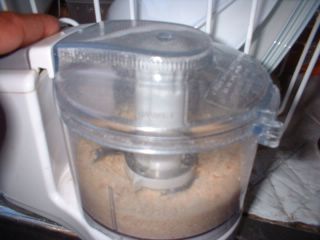
    Before the bread develops molds (which usually happens if the bread is kept in a place where heat causes "sweating" of the bread, and moisture is trapped inside the plastic packaging. Shred the bread into small pieces and place on a baking sheet with enough space that allows good exposure. Since winter is a time when there are no flies, just place the baking sheet on the countertop overnight. The humidity level during winter drops so much (below 30% in my area) that by morning the bread slices are very crunchy. I use the chopper to pulverize them (some use ziploc and rolling pin). When bread is dehydrated this way, there is no danger of toasting them, as against using the oven during more humid days (either at 200 deg of right after turning off the oven after baking a dish or rolls and letting the residual heat dehydrate the bread pieces for around 5 minutes).

    After pulverizing the breadcrumbs, I store it in the container of the first and only breadcrumbs I ever purchased. Posted by Hello

    My Sons are Participants in Jump Rope for the Heart Program

    Dearest online friends of mine,

    This is not a post related to food/kitchen. My children, through their school, are participants of American Heart Association's Jump Rope for the Heart program. I am helping them raise funds for the said event, which will be on February 8.

    As you may well know I have not known a lot of people in my area mainly because we are new here and that I am always inside the house given my situation. Since I have met more people online than in personal, I thought I can help my sons more through the internet.

    I hope for a positive response from you. Thanks a lot. I appreciate your participation in this endeavor.

    Here's my sons' message:

    *************

    Dear friends of our mom,

    We are joining in the American Heart Association's Jump Rope For Heart event at our school. We will be jumping rope to help the American Heart Association raise money to fight heart disease and stroke. Can you help us by making a donation? Thanks!

    The American Heart Association's online fundraising website has a minimum donation amount of $25.00. If you want to donate less, that's ok. You can just send the check right to us payable to AHA and sent to our mailing address (Please email our mom for our address) and we'll make sure the American Heart Association gets it.

    Follow this link and this link to visit our personal AHA websites and help us in our efforts to support American Heart Association - Northeast Affiliate.

    Thank you for your generosity.


    ******

    Friday, January 28, 2005

    Fidget Diet

    I was watching CNN news this morning while folding the laundry. Dr. Sanjay Gupta talked about the Fidget Diet, about people burning calories without having to go to the gym, but just by engaging simple light activities instead of just sitting still, which is what most obese people do. It was backed by scientific studies.

    The male newscaster said he was skeptical about it. The woman newscaster said it made sense.

    For me, it was just COMMON SENSE.

    Well, we burn calories even when we sleep. That's why we have BASAL METABOLIC RATE. That's basically the amount of energy our body uses for MAINTENANCE. Any activity, no matter how light, will burn up additional calory. Of course, the heavier the activity, the more calories burned.

    So obese people who find it quite hard to get up from the couch because they are heavy are in a vicious cycle. They eat a lot out of boredom, usually junk food. They have to burn the excess calories but the slightest movement costs so much that they feel tired right away. The lack of even moderate physical activity makes their muscles lax and may also lead to atrophy (secondary to disuse), such that a little exertion is too much for the muscles to handle. It's hard for these people to escape that cycle.

    The leaner people are usually so used to moving about. A little gain in weight and they notice right away that they need to move more. A little difficulty in bending because of a thicker fat under the skin becoming more prominent as they bend sends signals of cutting down on food intake to match the level of activity, and of increasing physical activity to mobilize these fat reserves. Since ordinary movement is something that does not take so much of an effort for these leaner people, there is no vicious cycle as I described above. They are not trapped. They simply make a choice to add activity or lessen caloric intake. They usually cannot last long in activities that don't involve much movements. They usually do something else while watching TV, like folding laundry, or just jogging in place. An hour of just sitting still usually results in slight back/neck pain, that they have to shift, stretch, or DO SOMETHING to alleviate the discomfort, even simple things as moving the feet. Any of these simple activities burn calories.

    There was a question raised on whether Dr. Gupta is now telling the public that they don't have to work-out in the gym. That was a stupid question.

    Working out either in the gym or in the comfort of your home is a personal choice. Some people just don't have the gumption to do something unless they see others do it, or spend a fortune on a program to make them stick to it (sayang ginastos eh), or just don't understand the relationship between their caloric intake and how their body uses that, so they go the gym.

    Understanding the relationship between the two takes some intuitive reflection.

    I will never forget this one law of physics: For every action, there is a reaction.

    The same principle underlies the "Atrophy of Disuse" in medicine/physiology, which explains why the muscles of comatose/paraplegic patients waste away without (passive/active) movement. It is as simple as seeing that muscles are developed in response (reaction) to the amount of stress it is subjected to. The more physical stress, the more it develops. Hence you see these bodybuilders building with their muscles so well-defined and bulky and toned.

    Aerobic (Oxygen-requiring) activities such as jogging and dancing will demand more activity for the heart (heart needs to keep pumping hard to distribute enough blood/nutrients/energy to the peripheral areas), and therefore these activities help the heart "tone up" such that getting to a high altitude (which has thinner air and therefore less oxygen) is easier for people used to aerobic activities compared to those who are not.

    A long time ago, I have read an article saying that jumping rope helps children build strong bones. I never doubted that, because with every stress you subject those bones (landing on their feet as they jump; muscles pulling them during contraction), these bones, backed by sufficient nutrient supply like calcium and collagen (protein), also develop accordingly.

    And developing the muscles better start as early as childhood, to develop in the children that tendency to do something when they have nothing to do. Don't be afraid to give your children heavy tasks; just let them start slowly, from lighter load to heavier ones, so that their muscles develop to an increasing level as time goes by. Never succumb to their tendency to feign tiredness. Don't be guilty if you seem like a slave-driver. Just bear in mind that it is for their own good and they themselves will reap the benefits of physical activities. In this age where a lot of electronic toys mimic outdoor activities or simply lure children into just sitting in front of the TV/computer (which I think won't help the efforts of this government to eradicate the obesity problem and which, in my opinion, should be banned), it is possible to achieve a compromise, like limiting TV hours to max of two per day, and asking the kids to do something physical (like jump rope) first for at least 30 minutes before they can watch TV/play computer games, or encourage them to do some stretching exercises during commercials.

    With regards to my children's diet, I let them eat as they feel they should, but I also keep on reminding them to burn off the extra caloric intake with more activities if they plan to eat more than what I think they should. (I usually do this with my first son.) My notion of how much they eat not only depends on how much they move, but also on the needs of their bodies as they grow up (which are taken into consideration by the USDA food pyramid guidelines).

    I and my children (youngest is 7) always help one another pile the firewood (which I can only imagine will make many Filipino mothers gasp, probably thinking that it is a pity we can't afford a maid here. On the contrary I am grateful for the lack of maid that I have a better chance of making my children more sensitive to what maids/househelps in the Philippines go through.) ...Then I reward all of us a hearty and healthy meal.

    Oh, and a last note: this is also one of the reasons I try to limit my computer time to just 2 hours a day...Oops! I exceeded my limit again!
    Wednesday, January 26, 2005

    Ham

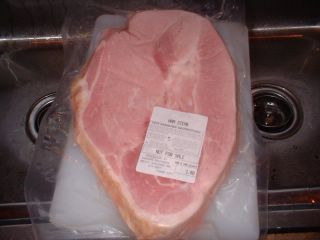
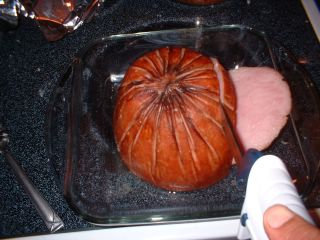
    The only form of Pork that really appeals to my husband is the HAM. We usually get this Ham Steak to break the monotony of beef. I just cook it on skillet-fried in minimal oil, served with mashed potatoes and either boiled greens or salad greens. This is good enough for the four of us.


    If we are having my stepdaughter with us, Hubby prefers this Smithfield Hickory Smoked ham. I cook it longer than that written on the instructions, and I have not considered glazing it (I am not sure if this kind of ham would be good with a glaze) until I read Stel's post on glazes in WK.


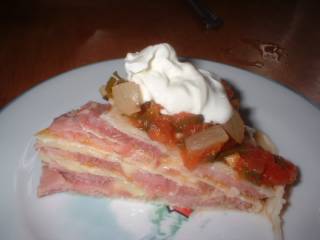
    I cook it longer to warm the core very well, then just slice it and usually we eat it with mac&cheese (Krafts is the favorite of hubby and his daughter). However we can't finish all this ham in one meal, so what I do with leftover is convert it to a kind of quesadilla but which I would rather label as Ham & Tortilla Stack.


    What I do is, I slice them thinly, then place on a flour tortilla, layer them alternately with cheese (white, mozarella, or cheddar or a mixture of these), sprinkle with chopped veggies like bell peppers and onions for that side from where I would slice off my sons' and my shares. I repeat the layers until all the flour tortilla or all the ham slices are used. I top with another flour tortilla so that it appears like stacked pancakes. Then I microwave this for a minute or until the cheeses are melted. Then I divide them into slices much like you would a pizza. I serve it with sour cream and tomato salsa in separate containers, not on the slice itself. Though my older son only likes my home-made regular (not hot) salsa, my younger son, hubby and stepdaughter like to eat the ham-tortilla stack plain, and I like it with both hot salsa and sour cream. Posted by Hello

    Tuesday, January 25, 2005

    Shrimp Sinigang

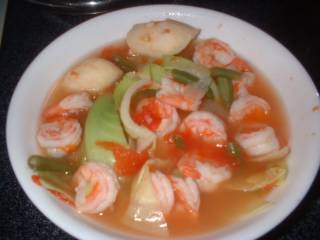
    My younger son is so fond of shrimps. When we were in the PI, my mother would steam shrimps and just let it sit in the fridge as fingerfood of her favorite apo (grandson). So, even if shrimps are quite expensive here (they are expensive even in PI), I buy them from time to time for variation. One of the favorite shrimp dishes is the sinigang. Never fails with the kids. I don't bother offering it to husband as he is not fond of seafoods (would only eat scallops and haddock and red salmon, as far as I know).


    I think the sour-salty taste of sinigang is characteristically Pinoy. So I don't attempt to offer it to foreigners.


    I usually buy from the grocery store the E-Z peel uncooked jumbo shrimps. These shrimps already are beheaded, and veins removed (to my dismay! I could use those for seafood broth to be used in pancit!).


    BOIL in a saucepan (all amounts approximations only' serves 3 persons):


    3 cloves garlic

    5 peppercorns

    1 medium onion

    2 med tomatoes cut in half

    2-3 cups water

    2 small peeled taro


    until the tomatoes are throughly cooked and incorporated in the mixture very well.

    Add:


    1/2 lb shrimps

    green beens (or later if you want it crispy)

    salt to taste

    sinigang mix (about 1 tbsp)


    Wait for about 2 minutes or until shrimps are cooked. Then add the greens. Suggestions are:


    a handful of:


    cabbage

    chinese cabbage (this looks like the baguio pechay in PI)


    and turn off the heat. Let the residual heat wilt these last additions. Serve immediately with plain rice, placed in individual serving bowls.


    My boys usually ask for a separate small bowl of just the broth and slurp it down as a finale.

    Posted by Hello

    Monday, January 24, 2005

    Mix-In-A-Jar by my Boys

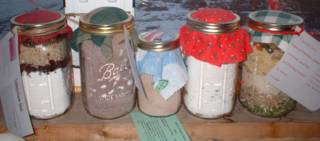
    I registered my boys in the After-School Program, which runs in seasons (different line up of types of activities for each season). During the Holidays last year, I enrolled them in the "Mixes In A Jar Crafts". Here's a photo of their products. Since both of them are enrolled, we got to try one and preserve the other at least until the collection was completed.


    These are, from left to right, all the mixes that they have prepared:


    Cranberry Raisin Bread

    Hot Cocoa

    small Hot Cocoa (different recipe)

    M&M Cookies

    Friendship Soup


    So far, we have tried the hot cocoa, the Friendship Soup and the M&M Cookies.


    M&M Cookies


    Since these were meant for the Holidays, the M&M chocolate candies were coated in red and green colors.

    Ingredients:


    For the quart jar:

    1 1/4 cups sugar

    1 1/4 cups M&M chocolate candies

    2 cups flour

    1/2 tsp baking soda

    1/2 tsp baking powder


    For the preparation, to be written on the gift tag, available here):

    1/2 cup butter or margarine, softened

    1 beaten egg

    1 tsp vanilla


    Instructions:


    For the jar:


    Mix together flour, soda, and baking powder. Layer sugar, M&M candies and flour mix in 1 quart canning jars. Be sure to pack firmly.


    Add fabric, ribbon and gift tag to jar.


    For the preparation:

    Empty jar of cookie mix into mixing bowl, blend thoroughly.

    Add 1/2 cup butter or margarin, softened, 1 beaten egg and 1 teaspoon vanilla. Mix until completely blended.

    Roll into 1-inch balls and place 2 inches apart on ungreased cookie sheet. Nake at 375 degrees until edges are lightly browned, about 12 to 14 minutes.


    Right after baking these cookies (as in piping hot and very soft), my husband was so eager to have one. Despite almost burning his fingers and tongue, he could not wait for the cookies to cool down first.


    Friendship Soup


    This is like a combination of stew and rice porridge, with the addition of beans. Hearty and healthy, this is a novelty for both me and my husband, and I can't believe it is an American recipe! I have been making dishes converting leftover mac & cheese into revised version of the Filipino sopas, which my husband has jokingly commented looked like a dish for swine (sarap batukan). This looked worse, and I admit, it does seem like "kanin-baboy." But I am open for new things, so I cooked it. It has a taste characteristically Italian, and it went very well with biscuits.


    Ingredients:


    For the jar:


    1/2 cup dry split peas

    1/3 cup beef bouillon granules

    1/4 cup pearl barley

    1/3 cup dry lentils

    1/4 cup dried minced onion

    2 tsp Italian Seasoning

    1/2 cup uncooked long grain rice

    1/2 cup tri-colored pasta

    1/2 cup alphabet macaroni


    Layer ingredients in jar and put lid and cover on.


    Additional ingredients for preparation:


    1 lb hamburg

    1 can tomato sauce (4-0z)

    1 can diced tomatoes (28-oz)

    4 qt (8 cups) water


    Instructions:


    In a large saucepan, brown hamburg and drain.

    Carefully remove macaroni from top of jar and set aside. Add water, tomatoes, tomato sauce and soup mix. Bring to boil. Reduce heat, cover and simmer for 45 minutes.

    Add the macaroni. Cover and simmer for 15 to 20 minutes or until beans are tender.


    Yields 4 to 5 quarts, so I prepared this for a weekend lunch when we had my nephew and niece with us.


    Hot Cocoa Mix


    We have been enjoying these jars of hot cocoa. It goes well with the cold season.


    Ingredients:


    2 cups powdered milk

    1 cup sugar

    1/2 cup cocoa

    1/2 cup powdered non-dairy creamer

    1/4 tsp salt

    miniature marshmallows, optional


    Instructions:


    Combine all ingredients and layer with marshmallows in quart jar. Makes about 4 cups osf hot cocoa mix.


    For preparation:


    Add 2-3 tbsps to a mug of hot water.


    *****


    I am documenting these for future reference. Those that we deem really good we might try to prepare next holiday season. It is a creative, enjoyable and frugal way for the children to prepare their gifts for relatives. Other ideas can be found at this website and some more here. (I found it when I was looking for the Preparation instructions for the M&M cookies because both boys forgot to attach a gift tag. I am sure my MIL and SILs will appreciate these.

    Thursday, January 20, 2005

    Chewy Brownies (A Mix-In-A-Jar Recipe)

    Last December my younger son came home with a note about the class' celebration of Thanksgiving and a request for sending in a bread mix for the occasion. They would bake the mixes there. I looked for recipes of mixes at VeryBestBaking.com but I had no canned pumpkin to make a mix for the traditional pumpkin pie or bread. What I had was, as usual, the Nestle Toll House Choc Morsels. So I opted to prepare the mix for Chewy Brownies and instructed my young son to give it to his teacher when he gets to school.


    He came back home that day still with the mix. Apparently he forgot (again) to give it to his teacher for their celebration.


    I ended up baking it. It was my first time to bake brownies without Betty Crocker's help (that's one of my husband's favorite mixes). It was greeted with warm acceptance and eager mouths.


    Here's a cut and paste of the recipe from the website.


    Ingredients:

    Directions:

    LAYER ingredients in order listed above in 1-quart jar, pressing firmly after adding each ingredient.


    NOTE: After adding cocoa, wipe out inside of jar with paper towel. Seal with lid and decorate with fabric and ribbon.


    RECIPE TO ATTACH:

    PREHEAT oven to 350° F. Grease 13 x 9-inch baking pan. Pour brownie mix into large mixer bowl; stir. Add 3/4 cup (1 1/2 sticks) melted butter or margarine, 2 large eggs, 2 tablespoons water and 2 teaspoons vanilla extract; stir well. Spread into prepared baking pan. Bake for 18 to 25 minutes or until wooden pick inserted in center comes out slightly sticky. Cool completely in pan on wire rack. Dust with powdered sugar. Makes 2 dozen brownies.


    You, together with your kids, may want to make this as gifts for relatives next Christmas (Chewy Brownie Mix in a Jar). Here's a free printable gift tag to go along with it. You will just need quart jars and some ribbons. For an idea of how it looks like, click on the recipe link I provided above.


    Posted by Hello

    Monday, January 17, 2005

    Choc-Oat Chip Cookies

    I know, I know...I previously said quite with a final tone that I might not try another cookie recipe, but I could not help trying this other recipe at the label of Nestle Toll House chocolate morsels, because I had a bag of old-fashioned rolled oats which had been sitting in the pantry for eons.


    Basing on my observations in the past, my kids and husband did not like whole oats in breads. I presumed that they would not like this either. I sighed deeply and got on with it.


    So it was a pleasant surprise to see those cookies gone in a matter of hours that night. I said to hubby,"I thought you did not like oats?"


    "Are you kidding? I LOVE OATMEAL."


    Now I have run out of rolled oats.


    Recipe can be found here and at the back of the packaging of Nestle Toll House Semi-Sweet Chocolate Morsels (for a video of how-to and step-by-step photos, get the idea from the Original Chocolate Chip Cookie recipe here). So, for you newbies in cookie-baking like me, go ahead and get a big pack of those morsels and share with your family these sweet delights.Posted by Hello


    Haddock Fried in Butter

    So far, after being married to my fussy-eater husband, I have learned only of two fishes he likes: (1) the canned Red Salmon and (2) the fresh Haddock.


    Simple to prepare, this butter-fried haddock only needs to be dredged in flour , seasoned with salt and pepper, then fry in butter (I heat the butter at setting #7 and wait til the butter has clarified.), five minutes on both sides. Drain excess oil on paper towel.


    I like serving it with creamed beans and french fries.


    For creamed beans, heat 2 tbsp butter(setting #6) then add 2 tbsp flour all at once stirring with a ballon whisker to avoid formation of lumps. Then add 1 cup of milk, still stirring continuously until the desired consistency is achieved. Add previously boiled beans, season with salt and pepper to taste, and remove from heat when beans are heated through. Add a handful of shredded cheddar cheese (or to taste) and stir to melt.


    I don't feel the need to teach here how to make french fries, but in case one is such a newbie to it, just cut the potatoes accordingly, place on paper towel sprinkle some salt, pat with the paper towel then deep fry on high heat for about 5 minutes or until potatoes develop golden crust.


    Of course you can always serve the fried haddock with mashed potatoes (or simply, boiled potatoes -- let your husband mash and season it himself).Posted by Hello

    Custom Search