Showing posts with label slowcooked. Show all posts

Friday, December 18, 2009

Pork Hamonado

I was asked recently by two fb friends about a hamonado recipe. I presumed it was the pork, since that was what we always used to have when I was still in the Philippines. I did not really have a recipe, but I do remember my Nanay simmering a big cut of pork, usually pigue in lots of pineapple juice, flavored with soy sauce and brown sugar.

Ingredients:
1 pork ham (roast cut, about 5-6 pounds - whether cured or not, it won't matter)
1 liter pineapple juice (about 40 oz)
1 small can of pineapple, round slices, for garnishing (up to you if you want more)
1/4 cup soy sauce
1/2 cup brown sugar
3 bay leaves
10 peppercorns

Instructions:
I slow cooked the whole ham in the pineapple, soy sauce, spices and brown sugar on high for about 4 hours (although my son disturbed the whole process by opening the lid after 3 hours, so instead of being completely done by the end of the 4 hours, it was still quite tough although done). I served this as is during the Filipino Christmas Party for the sake of our American hubbies (two attended, so that makes it three including my husband). Knowing my hubby would have liked it drier and more tender, I did not expect him to eat much of it since it was swimming in its own juice plus the pineapple juice and was very wet. But I did not have the time then to fix it some more to his liking. I did so the next day for supper using the big left over.
For those who will attempt to make it the way I did, the gist of the steps is: (1) boil ham in the mixture until just done, but will remain whole when lifted out of the pot instead of fall-off-the-bone tender; (2) remove fat and make the sauce; (3) roast ham with pineapple on top, basting from time to time with the sauce. They way I presented this recipe here is more like narration of how I made mine, adjusting under the circumstances. I encourage you to proceed as it suits yours.

To continue with the details of the next steps after boiling/simmering...

That night, I placed the big leftover ham in a roasting pan and left it out in the garage which serves now as my big refrigerator. The next day, I removed all the fat that solidified on top, then simmered the ham covered inside that roasting pan for about an hour, basting from time to time with the sauce. More fat shed oil, so that at the end of 1 hour (which assured me the ham was heated all the way to the middle), I used the fat separator in making the sauce. [Please take note that if you directly roast after slowcooking, you will not need to simmer again. I did this only to reheat before I roasted.]  Leaving about a cup of sauce in the pan, I transferred the rest to a small saucepan. I drained the juice off pineapple slices and placed the slices on top of the ham while I heated up the oven to 400 deg F. I placed the pan uncovered in the lower rack and started making the sauce in the saucepan. I just let it boil for about 10 minutes then started adding water-cornstarch mixture (about 1/4 cup of water with 2 tbsp cornstarch), and added in thin stream into the boiling sauce until it was thick as desired. Then I basted the roast/pineapple slices with this sauce about 3 times in intervals of 5 minutes, until the meat achieved a good browning and the pineapple slices were glazed good.
I took out the whole ham and placed it on a platter, then poured some more sauce on top, and had the rest of the sauce in a gravy boat for each person to pour as desired on their slices of ham. The ham remained intact as we sliced, yet very tender and done just to my husband's liking. And we shared with my in-laws, who found the taste delightfully good! This time, we had just a little left over, about 3/4 cup chopped meat, enough for me to make a small batch of pork hamonado siopao.

Saturday, January 24, 2009

Honey Garlic Pork Roast

From Honey Garlic Pork Roast
I made this using the shoulder butt roast ("butt" cut as explained by hubby is any cut that they could make out of a poor area to cut due to many ligaments/fats. In Tagalog, "bara-bara"). Since this roast cut is the equivalent of a chuck roast in beef, I decided to slow cook it. Hubby loved the flavor of this sauce, and it reminded my sons and I of adobo. I got the recipe from allrecips.com but it was using pork ribs.

Ingredients:
shoulder butt roast
1/2 cup honey
1/2 cup packed brown sugar
2 tbsp + 2 tsp soy sauce (that's 40 mL)
1/4 tsp garlic powder
1/4 tsp ground ginger
1/2 tsp ground mustard.

Instructions:

Brown all sides of roast.
Prepare sauce. Pour some on the slow cooker.
Place roast underside up in the slow cooker and pour some sauce.
Flip roast over and pour the rest of the sauce, distributing well all over surface.
Cover and slow cook for 4 hrs on high (or 8 hrs on low)
Let rest on a platter for 10 mins before slicing.
Serve with your favorite sides (photo here shows rice, chop suey, and basic egg bread)


Thursday, December 04, 2008

Pork Spare Ribs

I used the same recipe for Korean Beef Ribs, adding ginger
From Pork Spare Ribs
as an afterthought (so it was not seen on the pics), and still using the slow cooker, only cooking this time up to 4 hours only.

This is purely for the enjoyment of my sons and mine. My husband does not like eating ribs..."takes a lot of energy to remove the meat from the bones."

Gotta have to make this post short as I have to study for my TNCC training the next 2 days...


HOW TO:
Take 4 tablespoons of brown sugar and sprinkle or rub onto the slices and marinade for 10 minutes while getting the rest of the ingredients ready. Mix in a small bowl: 4 garlic cloves crushed and minced, 4 tablespoons soy sauce, 2 tablespoons sesame oil, 1/4 cup rice vinegar, 1/2 teaspoon red pepper flakes, and 2 tbsp chopped ginger. Place some of the mixture on slowcooker, then put the ribs in, pour the rest of the mixture. Cover and slow cook on low for 3 hours, then switch pieces over then cook for another hour. Transfer to a broiling pan, set oven on low. Only start broiling once you get to start making the sauce.

Strain the sauce into a fat separator. Boil the sauce. Meanwhile, place the ribs in the oven to start drying them up so sauce clings better. Prepare water-cornstarch mixture, and add in thin streams once the sauce is boiling, stirring constantly. Adjust taste with white sugar, salt,and pepper. When sauce is thickened a bit, get some to glaze your ribs. Let broil some more while you continue to thicken your sauce to desired consistency.

Transfer to a bed of salad greens, garnish with either spring onions or toasted sesame (you can sprinkle sesame onto the pieces while broiling).

Serve with hot plain rice.

Saturday, November 29, 2008

Kare-kare (Beef Stew in Peanut Sauce)

Kare-kare is one of my favorite Filipino foods,
From Kare-kare
and I think the best part to use for this dish is what we Filipinos refer to as kenchi (our freezer stock is labeled "soup bone" but the actual cut is from the shanks. The Mama Sita's ready mix has the "oxtail" on the procedure. Well, it is good for the flavor, but shank meat is best for eating enjoyment of this Pinoy dish. When I do want this dish, I usually make bulalo with more meat and soup than we could use, so that I will have leftover boiled meat for kare-kare. And I do not put salt to achieve the right saltiness because kare-kare is meant to be not salty, so we can enjoy it with bagoong alamang (shrimp paste). This is how I prepare it.

Prepare in a slow cooker the following:
oxtail, soup bones (Boil first in plain water for 10-15 minutes, removing scum as it rises, then dish these out and place in slow cooker)
water, enough to cover the meat/bones and some more
3-5 cloves garlic
10-15 peppercorns
5 bay leaves
some salt

Slow cook for 8 hours on low setting.

Set aside 3 cups of broth. Boil the vegetables (typically chunks of eggplant which go first followed by green beans.

Meanwhiel, in a bowl, mix and blend well the following:
1 cup broth
3/4 cup peanut butter
1 pouch Mama Sita Stew Base Mix Pang Kare-kare

When eggplant and green beans are done, add the mixture and stir to mix well until thickened to desired consistency. Add bok choy and cook for about 1-2 minutes.

Serve over hot rice with shrimp paste.

My younger son and I love it. My older son, so-so. My husband, forget it. He never did like any meat part with lots of fascia/ligaments in it, tender or not.

Wednesday, November 19, 2008

Savory Pot Roast

Here's another dish that makes use of spices (I love spices!)
From savory pot roast
And to save time, I get a packet of McCormick Savory Pot Roast Seasoning. Since this is slowcooked, prep time is short, then I just forget about it while it cooks, then as the aroma fills the house, I get reminded of what we are going to have for supper. One thing I like about McCormick is that, since it mainly uses natural spices, I can't really go wrong with it. Plus, I get a glimpse of how dishes are supposed to taste like per American standards instead of Pinoy standards. While this dish did not taste at all like the typical mechado or caldereta (more tamato-based) beef stews of the Filipinos, we all like the taste of it. We enjoy this usually with slices of freshly baked bread.

INGREDIENTS:

3 pounds boneless beef chuck or rump bottom round roast, well trimmed
5 cups cut-up fresh vegetables, such as carrots, celery, onions and potatoes
1 package McCormick® Slow Cookers Savory Pot Roast Seasoning
1 cup red wine or water

INSTRUCTIONS:

1. Place roast and vegetables in slow cooker.
2. Mix Seasoning and red wine until blended. Pour over roast and vegetables. Cover.
3. Cook 8 hours on LOW or 4 hours on HIGH. Remove roast and vegetables to serving platter. Stir sauce before serving.
IMPORTANT: For best results, do not remove cover during cooking.

Sunday, October 12, 2008

Beef Pares with an Apple Twist

From 10-06-08 dinner

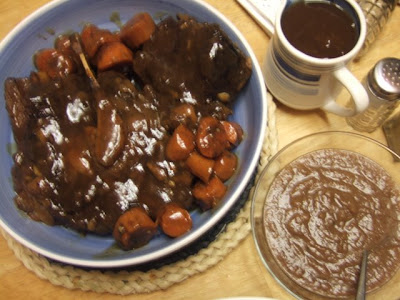
I used the Beef Pares recipe, and added carrots and ginger (per comment of one who tried adding these to my recipe), then instead of using frozen beef broth to top the chuck roast (to avoid drying it up), I used half of the apples I usually use for an apple pie, mixed with the usual spices cinnamon, nutmeg, allspice and ground cloves.


When cooked, I placed the apples in a bowl first and mashed with a fork. Then I strained the sauce (separating the spaces and carrots in the process), then thickened and finalized the gravy the usual way. Then I mixed some of the gravy with the mashed apples, tasted it and adjusted by adding some soy sauce as needed. The resulting applesauce was yummmmmylicious! Hubby liked it as well! (He usually does not use the sauce of beef pares; he likes savoring the flavor infused in the meat itself.)

Then we had very little leftover. At first I was considering making beef asado roll but since I did not have enough meat mixed with remaining applesauce, I decided to use it for fried rice (I had plenty of gravy remaining, perfect for flavoring the rice!)

Friday, September 08, 2006

Savory Chicken Feet

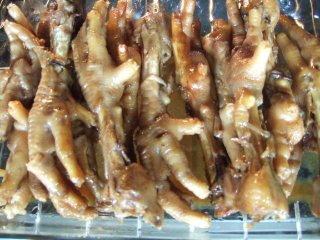
Before I give the recipe for the chicken feet, here's a slide of instructions on how to prepare them.


When I was still in the Philippines during review days for the medical boards, my friends and I would often buy savory chicken feet from a Chinese restaurant.  I used to just know chicken feet a la adidas (the grilled ones) which was a common merienda for me when I was still in elementary school.  When I had a taste of this super tender savory chicken feet dish, I was hooked.

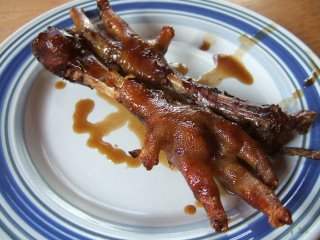
Here's my version for Savory Chicken Feet (It does not taste like the ones we ate back in PI, but tastes good nonetheless.)


Ingredients:
12 chicken feet
3 tbsp dark soy sauce
2 tabsp rice wine
1 tbsp red wine vinegar
3 slices ginger
3 cloves, finely minced
3 sliced green onions
3 tbsp dark brown sugar
1 star anise
1/4 tsp pepper
1 tbsp sesame oil
2 cups water
1 tbsp cornstarch dissolved in 1/4 cup water

Instructions:
Place all chicken feet in the slow cooker. Combine the rest of the ingredients and pour over chicken feet. Cover and set in slow cook for 5-6 hours (I did this overnight from midnight). Then uncover and stir so those on top will be at the bottom and cover again to cook for two hours more.

Transfer the chicken feet onto a baking pan. Transfer the sauce into a fat separator first to pour out the sauce without the fat/oil into a small saucepan. Boil then slowly add while stirring the cornstarch-water mixture to thicken to desired consistency. Brush the chicken feet with the sauce and broil for about 5 minutes to glaze, then turn the pieces over, coat with sauce again and broil for another 5 minutes. Serve with hot plain rice (or pampulutan. Tagay na!)

Sunday, April 10, 2005

Beef Pares

This is a re-posting of beef pares from my old kusina, edited with some new ingredients as per comments given that time, and a new method.

This dish is something I created in my effort to copy a favorite (and famous) item in some side-street restaurants in the Philippines. Beef Pares, a Chinese influence to Filipino cuisine, I believe, is juicy tender stewed beef in sweet brown sauce. By experimentation, I was quite successful in re-creating the dish in my now American kitchen. While the sauce is served thin in the Philippines, I have tweaked it to come up with a thick sauce, which has more appeal to the Western tongue of my in-laws and husband (who is quite picky when it comes to food). They (and I) love this dish. During a town hall meeting, my father-in-law was chatting with a friend, and he introduced me, with the phrase, “Linda [my mother-in-law] is already a good cook, but she [pointing to me] is even better!” While I felt flattered with the remark, I was embarrassed because my mother-in-law was also with us! It must be quite insulting to her to hear that, but then we have a very good relationship anyway, and even she tells me I am a good cook. I usually serve this dish during my birthday celebration, although at times I prepare it only for my family over the weekend, and I end up with some leftover. With this leftover, I can make another Chinese-influenced Filipino favorite merienda (snack) – the beef asado siopao, which are steamed buns with beef filling, also loved by my in-laws. Or make it into a heavy snack – beef asado roll, which is a baked bread with beef filling (my very own idea). I am very proud to be sharing this recipe not only with other Filipina immigrants but also with Americans as well.

INGREDIENTS:

3 lb boneless beef chuck roast
1 tbsp oil for browning
2 dried bay leaves (laurel)
2 star anise
2 cinnamon sticks
some dried orange peel (optional)

1/4 cup of red wine vinegar
1/4 cup soy sauce
1 tbsp Chinese rice wine
3 cloves of garlic, crushed then minced
5-10 peppercorns, crushed or freshly milled
1/2 cup of frozen beef broth (I have several in my freezer)

Additional ingredients for the sauce:
3 tbsp light brown sugar (or according to taste)
2-3 drops soy sauce to darken the sauce some more, if desired
salt and pepper to taste
2-3 drops of Worcestershire sauce
1 tbsp cornstarch dissolved in 1/2 cup cold water
1 tsp sesame oil


METHOD:

Brown the chuck roast on all sides using a heavy iron pan on high heat. Place the bay leaves, star anise, cinnamon sticks and orange peel in the slow cooker and then the roast on top of these.
Mix together all the other ingredients and pour onto the roast. Place the frozen beef broth on top of the roast to baste it while cooking. Cover and slow cook for 8 hours.
After 8 hours, scoop out the sauce and let pass through a strainer to remove the spices. Keep the roast in the slow cooker under warm setting. Transfer the sauce into a fat separator then pour out the sauce minus the fat into a small saucepan. Boil. Adjust the taste with the additional ingredients for the sauce. Thicken to desired consistency by adding the cornstarch-water mixture in a slow stream while stirring. Turn off the heat and stir in the sesame oil.
Transfer the roast to a serving platter and pour the sauce over. This can be topped with snips of chives for a more appetizing look. Serve with mashed potatoes or plain rice, plus steamed vegetables.

Uses for the leftover, if any:

I roughly chop the meat, then reheat it on low with the sauce, constantly stirring to avoid scorching. For every cup of chopped meat, there must be about 1/2 cup of sauce. If the sauce is too much, I just let it evaporate as I reheat. If it is not enough, I add some more water in increments of 1/8 cup plus some soy sauce, sugar, salt and pepper to taste. The mixture must not be runny and must hold together when cooled.

I use this as filling either for beef asado roll (baked version) or beef asado siopao (steamed version).
Custom Search